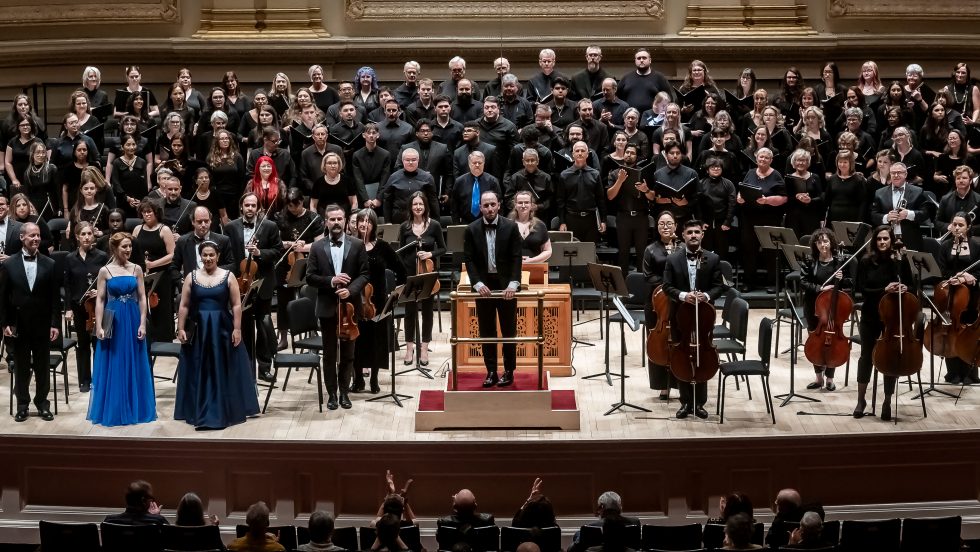
Merced College Music Professor Alex Simon has performed at New York City’s Carnegie Hall before, while a graduate student at Westminster Choir College at Rider University in New Jersey.
So when he was presented with an opportunity to return to the Isaac Stern Auditorium / Ronald O. Perelman Stage at Carnegie Hall in May, he brought along whomever he could, including members of the Merced College Community Chorus (MCCC).
“We were there because Simon was there,” Merced College music student and choir member Etuale Muliaga said. “It was a great opportunity to challenge our choir and get our name out there.”
Added Simon, “Our whole choir had a blast.”
MidAmerica Productions reached out to Simon about conducting at Carnegie Hall roughly a year before the performance. When the opportunity arose, he had to take it.
“I care so much about my choir that I want them to have the same opportunities I did,” Simon said. “It means more to me than conducting there myself.”
Carnegie Hall is the most famous music venue in America. Everyone who is anyone in music has performed there. Tchaikovsky conducted there on opening night in 1891.
“While we prepared, I would talk to the choir about the historic value of Carnegie Hall and the way it absorbs amazing artistry,” Simon said. “It was a once-in-a-lifetime opportunity.”
Merced College vocal student Jamie Asdorian, 45, was able to live out a dream.
“When I was 14 and began singing, I could never have imagined gracing the Carnegie Hall stage,” the soprano said. “When we first started talking about appearing there last semester, I felt this undercurrent of excitement. But then the focus and desire to get the music as perfect as we could took over.”
Carnegie Hall was built as an architectural homage to music.
The elliptical shape under a domed ceiling, all made of hard masonry, produces a uniquely warm, crisp, clean sound to each of the roughly 2,800 seats in the five-tiered main auditorium.
Simon and fellow conductor and Tacoma Community College Music Professor Anne Lyman—a mentor of Simon’s who was also invited to conduct—coordinated 127 singers, including 47 from the MCCC and others from the Tacoma CC Chamber Choir, the Mid-Columbia Mastersingers from Tri-Cities, Wash., and the Concordia Chorale representing Middletown, N.J.
Each group worked on the same three pieces on their own before they convened in New York City to practice together days before the May 30 performance.
What type of music would honor the Carnegie Hall legacy?
“We needed music with nuance and scale,” Simon said. “We needed to be singing the type of music that can’t be replicated just anywhere. The classical music we prepared represents something grand and epic and appropriate to the space.”
Lyman, who gave Simon his conducting start during his student days at the University of Puget Sound in Tacoma, conducted the first two pieces.
They opened with Handel’s Zadok the Priest. The song is most commonly known as the tune played at the coronation of all kings and queens of England since King George II in 1727.
Asdorian said excitement turned to something else as Lyman raised her baton.
“It was really interesting creating this community away from our homes for each other and then perfecting it,” she said. “It was an ideal chorale experience.”
Muliaga, who sings tenor, was one of 15 Merced College students among the MCCC participants. They spent an entire year perfecting the Latin lyrics for the second piece, Haydn’s Te Deum, and details like where to add punctuation and emotion.
“The Te Deum was 10 minutes long, and it was amazing hearing the power that we had and seeing all the moving parts come together,” Muliaga said.
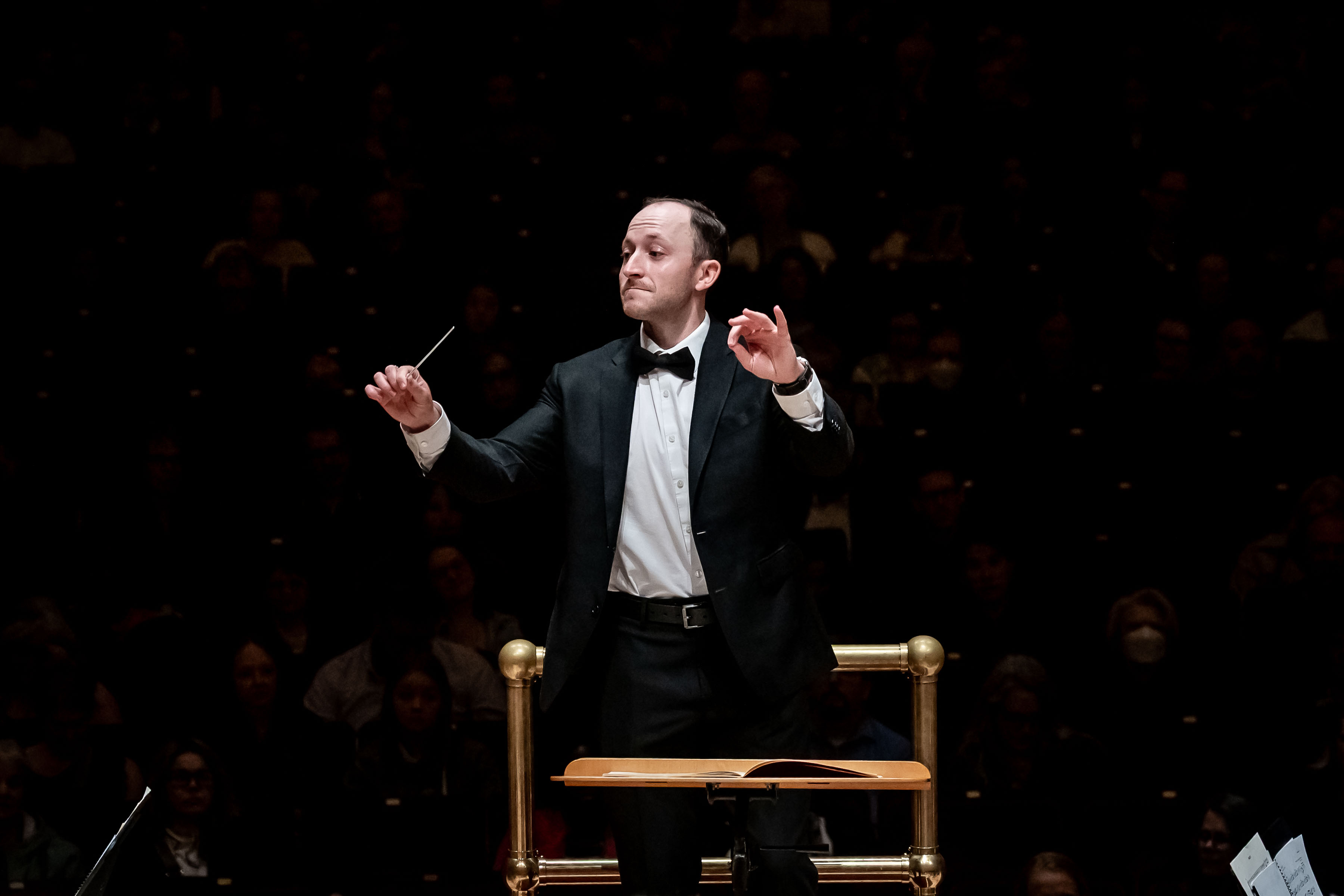
Simon conducted the final piece, Mozart’s 20-minute masterpiece, the Missa Brevis in C Major. It is colloquially known as the Sparrow Mass.
“The singers have to be quick on their feet and nimble enough to sing with the right emotion; it’s the most challenging part,” Simon said. “Every detail has to be executed to a T, or it ruins the moment and can be really difficult to overcome. But the choir was perfect and knew how to handle it.”
Muliaga committed to appearing at Carnegie Hall—participants paid their own way or received scholarships to travel to New York—an entire year before the performance.
“The first time we walked into Carnegie Hall was the day we performed there,” Muliaga said. “It was funny getting dropped off on the wrong side of the building and having to walk all the way around. But then we came down this hall and saw photos of the Beatles, Martin Luther King Jr., Bob Dylan, Frank Sinatra, huge performers.
“The space was jaw-dropping. The acoustics were insane. Even now, with us just talking about it, it came back to me how crazy it felt to be there.”
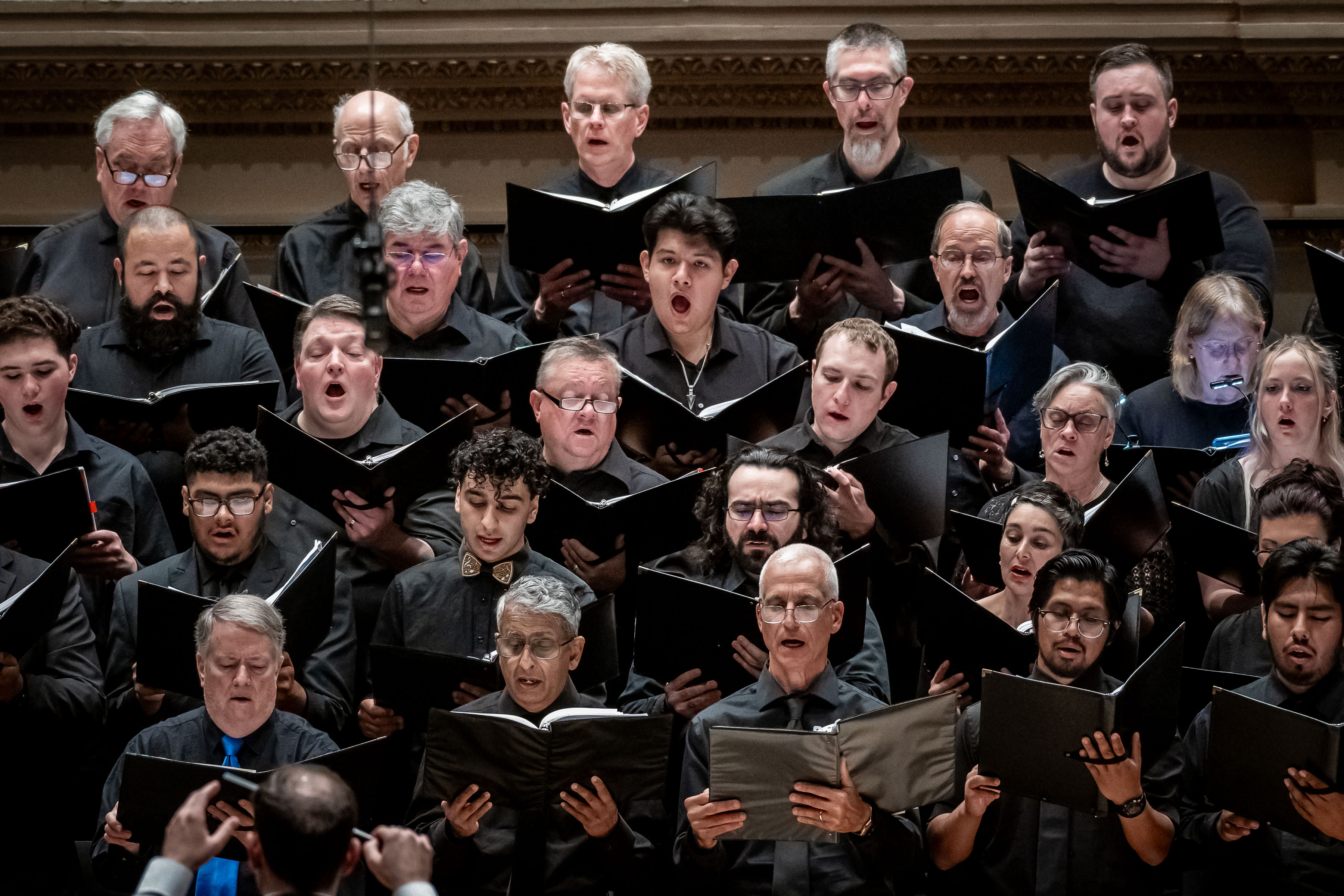
Simon said the Carnegie Hall performance was the first time the community chorus performed out of state in decades.
“Everyone spent so much extra time on their own preparing and developing their voices, that I equate it with being an elite athlete who practices to run one 100-meter sprint at the Olympics,” Simon said. “But committing so fully to that one opportunity, that’s what makes it such an impactful performance.”
It took full support of the Merced College community to make it happen, and Simon is grateful to all. Seeing the choir members beaming at the end was its own reward.
“They were thrilled, and that’s what it is all about,” he said.
Don’t tell anyone, but Asdorian’s father George Koottarappallil was so excited to hear her perform on that legendary stage that he tried to film the performance on the sly. (Carnegie Hall doesn’t allow it.)
For Asdorian, who used to direct a youth educational theater program at Kaiser Permanente that taught health messages in public schools, the feeling of community among the performers—even those who stayed behind—was its own reward.
“One of my passions has been bringing communities together and uplifting people,” she said. “This entire process has been exactly that. During our rehearsals in Merced, there were many choir members who could not join us in New York, but we practiced the music together for months. That brought us closer together.
“We took a part of them with us. What a beautiful experience.”